










Skiing and Snowboarding Should Be a Blast — Not a “Blow Out”
To help winter sports enthusiasts protect their knees and joints on the slopes, the sports medicine specialists at Michigan Orthopaedic ...
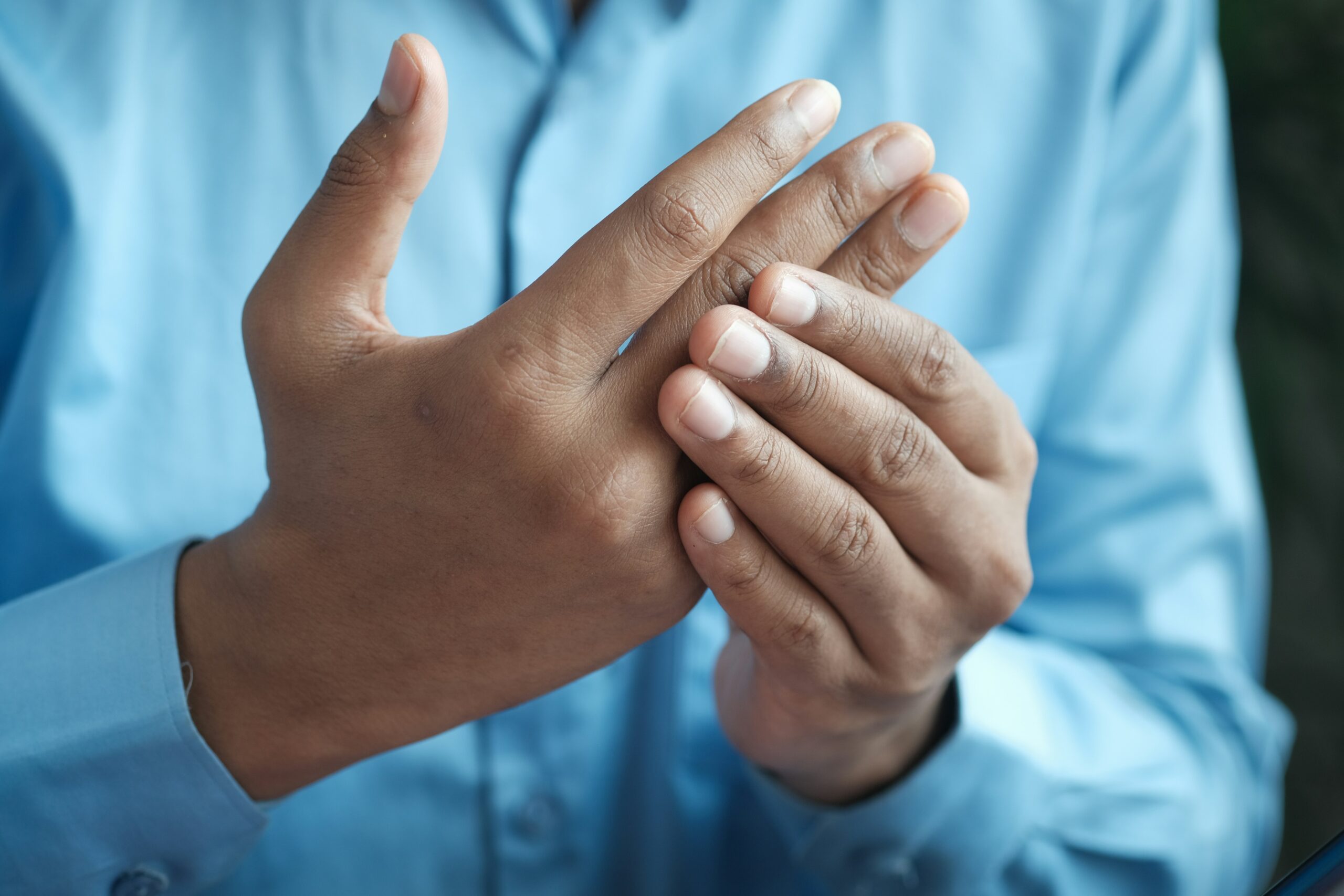
Getting dressed? Playing catch? Refinishing your deck? We use our hands to for almost everything in the world around us, which means a hand injury can turn small tasks into major challenges. But, fear not. To restore function as fast as possible, we’ve hand selected experts with extensive experience in specialized surgical procedures. Which means you’ll get a helping hand… and a personalized treatment plan.
Carpal Tunnel Syndrome occurs when the median nerve is compressed as it travels through the carpal tunnel in the wrist. This compression can result from repetitive hand movements, wrist anatomy, or underlying health conditions.
Cubital Tunnel Syndrome is caused by increased pressure on the ulnar nerve at the elbow, often due to prolonged elbow flexion or direct pressure.
De Quervain’s tendinosis occurs when the tendons around the base of the thumb are irritated, which will be very noticeable when forming a fist, grasping, gripping or even turning the wrist. De Quervain’s is the result of overuse.
Dupuytren’s Contracture is a hand deformity that develops over years, caused by the thickening of the palmar fascia leading to finger flexion.
Finger dislocations occur when the bones of the finger are forced out of alignment, typically due to trauma or injury.
Finger fractures result from trauma, such as falls, sports injuries, or direct blows.
Finger sprains are injuries to the ligaments of the finger, often due to hyperextension or twisting injuries.
Flexor tendon injuries occur from deep cuts on the palm side of the fingers, hand, or wrist, or from sports injuries.
Ganglion cysts are noncancerous lumps that commonly develop along the tendons or joints of wrists or hands.
Joints use articular cartilage in between bones to move smoothly. Arthritis occurs when the cartilage decreases – gradually causing pain and inflammation in the joints.
Hand fractures result from trauma, such as falls, direct blows, or crush injuries.
Mallet finger occurs when the extensor tendon is damaged, often due to a direct blow to the fingertip.
Osteoporosis is a condition characterized by decreased bone density, increasing fracture risk.
A sprained thumb occurs when the ligaments supporting the thumb stretch or tear – often occurring when the thumb is bent backward, away from the hand. The most common injury resulting in a sprained thumb is falling.
Trigger finger is caused by inflammation of the tendons in the finger, leading to difficulty in finger movement.
Carpal tunnel syndrome is a common condition that causes pain, numbness and tingling in the hands and arms. The condition occurs when the median nerve (one of the major nerves in the hand) is compressed or squeezed as it travels through the wrist. This puts pressure on the nerve instead of lubricating, as it normally would.
Ganglion cysts are common masses or lumps in the hand and/or the back of the wrist. The cysts are fluid-filled and can quickly appear/disappear and increase/decrease in size.
It is unclear what causes them, but they are typically harmless and not cancerous. (Note: Ganglion cysts that develop at the end joint of a finger are known as mucous cysts, and they are associated with arthritis in the fingers.)
Kienböck’s disease is a condition where the blood supply to the lunate, one of the small bones in the wrist, is interrupted. But because the bone is living tissue, it requires a regular supply of blood for nourishment. Thus, if the blood supply to a bone stops, that bone can die. This is known as osteonecrosis. The formal cause of Kienböck’s disease is not known.
Osteoporosis is a condition characterized by decreased bone density, increasing fracture risk.
A scaphoid fracture is a break in one of the small bones of the wrist. This type of fracture occurs most often after a patient falls on an outstretched hand. A scaphoid fracture can also occur during sports activities or vehicle collisions.
Arthritis can affect many joints, and that includes the wrist.
Wrist fractures commonly occur from falls onto an outstretched hand, sports injuries, or direct trauma to the wrist.
Wrist sprains occur when ligaments are stretched or torn, often due to falls, sudden twisting motions, or sports-related injuries.
Wrist tendonitis is commonly caused by repetitive wrist movements, overuse, or activities that place ongoing stress on the tendons.
To help winter sports enthusiasts protect their knees and joints on the slopes, the sports medicine specialists at Michigan Orthopaedic ...
To help homeowners protect their backs, shoulders, and hands during heavy winter weather, the spine and joint specialists at Michigan ...
To help local athletes stay strong and injury-free on the ice, the sports medicine specialists at Michigan Orthopaedic Surgeons share ...

We use cookies to improve your experience on our site. By using our site, you consent to cookies.
Manage your cookie preferences below:
Essential cookies enable basic functions and are necessary for the proper function of the website.
These cookies are needed for adding comments on this website.
Google Tag Manager simplifies the management of marketing tags on your website without code changes.
Service URL: business.safety.google (opens in a new window)
Statistics cookies collect information anonymously. This information helps us understand how visitors use our website.
Google Analytics is a powerful tool that tracks and analyzes website traffic for informed marketing decisions.
Service URL: business.safety.google (opens in a new window)
Marketing cookies are used to follow visitors to websites. The intention is to show ads that are relevant and engaging to the individual user.
Consent service for tracking traffic to and on Michigan Orthopedic Surgeons' website.
Service URL: miorthosurgeons.com (opens in a new window)
You can find more information in our Cookie Policy and Privacy Policy.